Iranian pistachio ingredients for global food industries
Buyer's guide
Iranian pistachio types and sizes: a buyer's guide
Iranian pistachios are traded by type (the shape of the nut), size (a count of nuts per ounce) and presentation (in-shell or kernel, natural or roasted). This guide explains each term the way the trade uses it, so you can specify what you need in your first request.
Talk to our export desk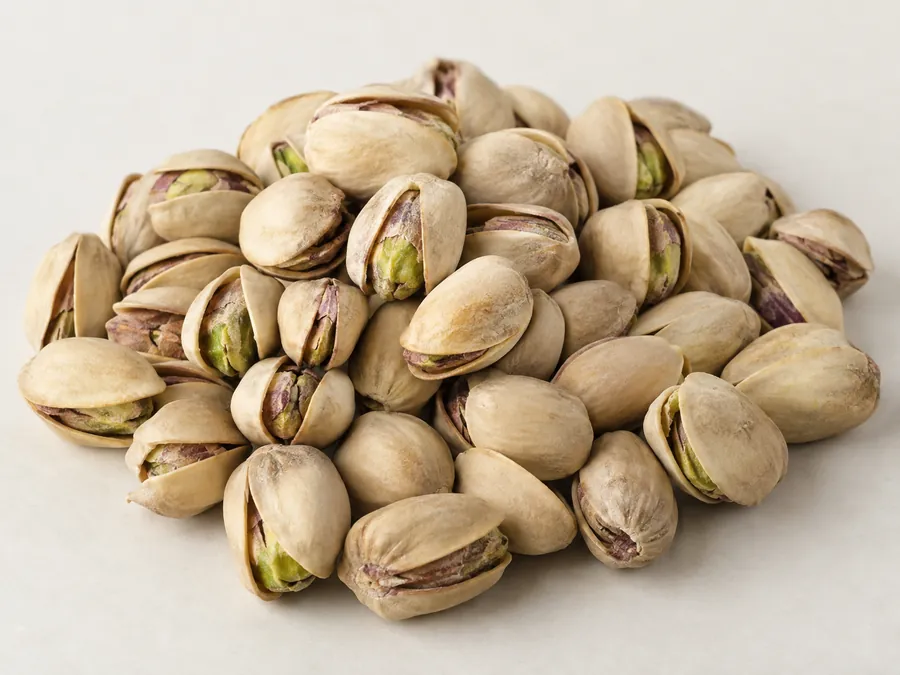
The four commercial types
Iranian pistachios are usually grouped into round and long types. The four names below are the ones most often used in export trade. Descriptions vary between traders, so always confirm the type against a sample or a photograph of the actual lot before ordering. This guide is educational: it does not mean every type is available at all times.
Round and long
How the main Iranian types differ.
“Round” and “long” matter most for in-shell buyers, because the end customer sees the shape. For kernels used in processing, color, cut and consistency usually matter more than the source type.
How size is stated: count per ounce
In-shell pistachio size is given as a range of nuts per ounce (one ounce is about 28.35 g). A size of 28/30 means 28 to 30 nuts weigh about one ounce. A lower count means larger nuts: 22/24 is larger than 28/30.
Size ranges differ by type. Trade listings for long types commonly show counts from about 18/20 to 28/30, and for round types from about 26/28 to 32/34. These ranges describe how the market labels lots; they are not a statement of what is available in a given season. State the count you need, and whether a neighboring count is acceptable.
Other points to state for in-shell pistachios
- Shell opening. Most in-shell trade is in naturally split (open) shells. State whether you accept a share of closed shells.
- Natural or roasted. Natural (raw) in-shell is the standard presentation. If you need roasted, say whether salted or unsalted.
- Crop year. Ask which harvest the lot comes from.
- Destination requirements. Food-safety limits and documents depend on the importing country. Name the destination and the standard you buy against, so testing and paperwork can be planned for it.
Kernels from the same types
Shelled kernels keep the shape of their source type: rounder from Fandoghi, more elongated from Akbari and Ahmad Aghaei. Kernel lots are also described by color. Natural kernels keep their purple-tinged skin and mixed green-yellow tones, while early-harvest (“Kal”) kernels are greener. When both the shell and the thin skin are removed, the result is a green peeled pistachio kernel (GPPK), used where a uniform bright green matters.
See natural pistachio kernels and green peeled pistachio kernels (GPPK).
Which type should you ask for?
- Importers and wholesalers selling in-shell to retail or repackers: start from shape (round or long) and count; the end customer sees both.
- Roasters: state the count range and opening rate, and ask for natural nuts ready for roasting.
- Food manufacturers using kernels: state the cut (whole, split, chopped), color profile and intended use; the source type is secondary unless your recipe depends on it.
- Premium chocolate, pastry and gelato: consider green peeled kernels or early-harvest kernels for color.
For bulk in-shell supply, see Iranian in-shell pistachios.
What to include in your request
- Product: in-shell or kernels (natural, early-harvest or GPPK)
- Type: Fandoghi, Kaleh Ghouchi, Ahmad Aghaei or Akbari, or simply “round” or “long”
- Size: count per ounce for in-shell, or cut for kernels
- Presentation: natural or roasted; salted or unsalted
- Quantity and packaging
- Destination country and the standard you buy against
- Delivery window
The exact type, size and documents available for an order are confirmed directly for each lot. Request a quotation
Buyer questions
Questions about Iranian pistachio types and sizes
Short answers to the questions buyers ask most before specifying an order.
Which Iranian pistachio type is best?
There is no single best type; it depends on the use. Shape and size count matter most for in-shell sales, while color and cut matter most for kernels used in production.
Is 28/30 a big or small pistachio?
28/30 means 28 to 30 nuts per ounce, a mid-range size in the trade. A lower count, such as 22/24, means larger nuts.
What is the difference between round and long pistachios?
Round types such as Fandoghi are shorter and rounder; long types such as Akbari and Ahmad Aghaei are elongated. The difference is mainly visual and matters most for in-shell buyers.
Does Rayan supply all four types?
This guide explains trade terms; it is not a list of current stock. Which type and size can be offered depends on the crop and the lot, and is confirmed for each order. State your preferred type and an acceptable alternative in your request.
Start a product conversation
Tell us what your production needs.
Share the product, grade, color, volume, packaging, and destination. Our export desk will respond with a clear next step.